Hazardous conditions on the Oregon DMV knowledge test
Prepare for Oregon questions about rain, fog, ice, skids, hydroplaning, visibility, and emergency responses in poor driving conditions.
Bad-condition questions test whether you slow down early, increase following distance, and stay smooth with steering and braking. Oregon wants drivers who reduce risk before traction disappears.
Study points
Rain, ice, fog, and snow all reduce traction or visibility. The safe response starts with lower speed and more space, not sharper reactions.
If the vehicle begins to skid, look where you want to go and avoid overcorrecting or slamming the brakes.
Hydroplaning becomes more likely with speed and standing water. Smoothly ease off the accelerator and let the tires regain contact.
Use headlights to be seen in poor visibility, but avoid high beams in fog, smoke, or snow where glare gets worse.
Emergency answers usually favor calm control: gradual inputs, controlled stopping, and staying off the road if conditions are beyond your skill.
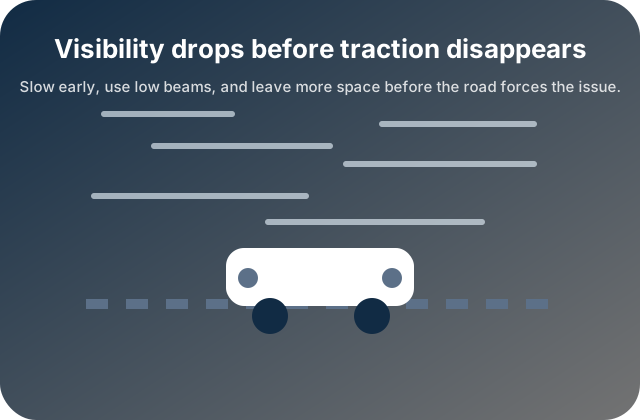
Smooth inputs buy time on bad pavement Bad-condition questions usually reward slower speed, earlier space management, and calmer control instead of sharp braking.You often lose sight distance before grip Fog, rain, glare, and darkness change the safe answer early. Headlights, lower speed, and more following distance usually arrive together.
Sample Oregon DMV questions
Review each answer and explanation, then confirm the rule in the official Oregon Driver Manual.
When visibility is reduced or the road is slick, you should generally:
Slow down and increase following distance
Keep your normal speed so tires stay warm
Drive closer to the car ahead for guidance
Use cruise control to stay steady
Correct answer: Slow down and increase following distance
Explanation: Reduced visibility and less traction both mean you need more time and space to react safely.