Learn how Oregon signs are grouped, what the main colors and shapes signal, and which sign patterns show up repeatedly on the permit test.
Oregon expects you to recognize sign meaning before you can memorize exceptions. Focus first on stop, yield, warning, guide, service, and recreation signs, then connect them to lane use and turning decisions.
Study points
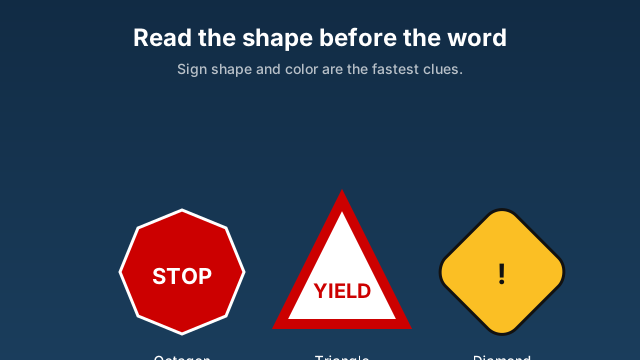
Memorize high-value shapes first: octagon for stop, triangle for yield, and railroad-crossing signs that signal a special hazard ahead.
Use color as a shortcut. Yellow usually warns, red restricts or commands, green guides, blue points to services, and brown marks public-interest destinations.
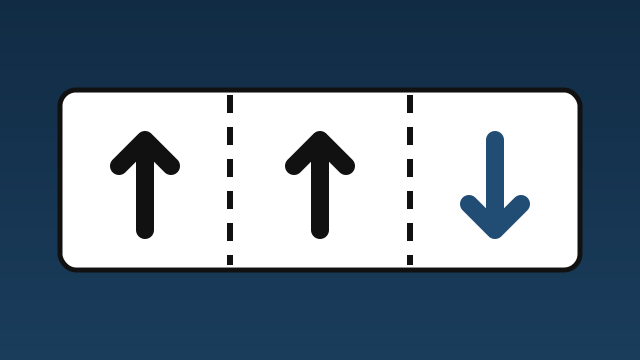
Treat lane-control and lane-use signs as action signs, not decoration. They often show up with questions about turning, merging, or being in the correct lane before an intersection.
When two signs work together, answer the question by the stronger restriction. A regulatory sign overrides a driver's wish to continue through a lane or turn.
Practice identifying signs quickly without reading every word. The real test rewards instant recognition of the shape, color, and intent.
Learn the shape before the wording Fast sign recognition usually starts with the outline. If you can spot octagon, triangle, and diamond quickly, the answer gets narrower before you read.Lane arrows decide the movement early Lane-control arrows tell you what the lane is for before the intersection. Use them early so the turn is already legal when you arrive.
Sample Oregon DMV questions
Review each answer and explanation, then confirm the rule in the official Oregon Driver Manual.
What does the octagon shape of a stop sign tell you?
You must come to a complete stop
You may slow down without stopping
The road ahead is one-way only
Large trucks have priority
Correct answer: You must come to a complete stop
Explanation: In Oregon, the octagon shape is reserved for stop signs so drivers can recognize a full-stop command immediately.