Review lane discipline, passing, signals, speed choices, and the everyday rules that make up a large share of the Oregon knowledge test.
This category covers the basic operating rules that govern normal driving. Most mistakes happen when learners remember the headline rule but miss the condition attached to it, such as timing your signal, checking blind spots, or understanding when passing is not legal.
Study points
Know when you must signal, how early to signal, and why a signal never replaces a mirror check or blind-spot check.
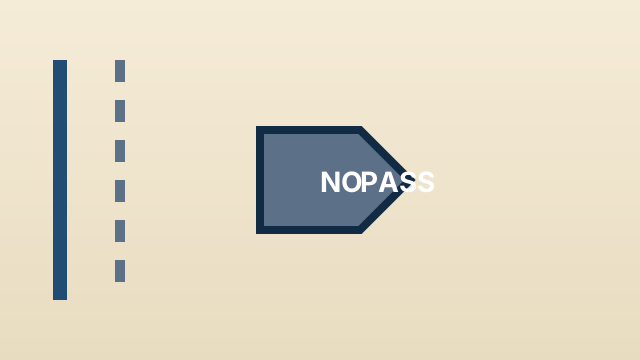
Separate legal passing from safe passing. Oregon questions often ask whether a passing move is allowed by both markings and visibility.
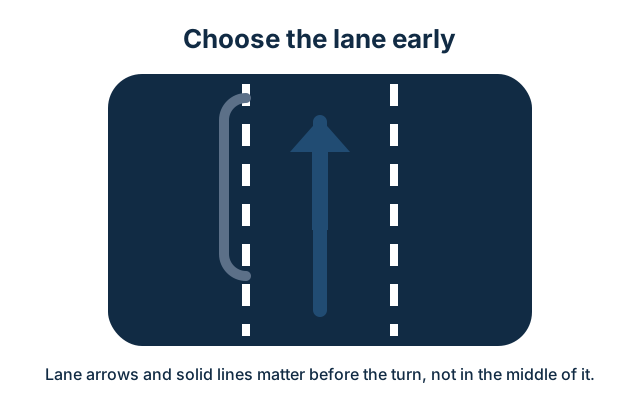
Lane position matters before the turn, not during it. The correct answer usually starts with choosing the proper lane in advance.
Speed questions are usually about conditions as much as posted limits. A legal maximum is not always a safe driving speed.
Watch for wording around school areas, work zones, and lane markings, because those details often change the correct answer.
The correct lane comes before the turn Rules-of-the-road questions often turn on where the vehicle should be before the maneuver starts, not halfway through it.Markings and signs work together If the line and the sign both restrict passing, the safe answer is to stay put until both signals allow the move again.
Sample Oregon DMV questions
Review each answer and explanation, then confirm the rule in the official Oregon Driver Manual.
In Oregon, you normally drive:
On the right half of the road
On the left half of the road
In any lane you want
Only in the center lane
Correct answer: On the right half of the road
Explanation: Drivers generally keep to the right except when a legal and safe reason exists to move left, such as passing.