Parking and stopping rules on the Oregon permit test
Review where you may not park, how to secure the vehicle, and which stopping locations are unsafe or illegal in Oregon.
Parking questions often hinge on location and risk. Oregon expects drivers to understand where a parked vehicle would hide sight lines, block access, or create danger for pedestrians and approaching traffic.
Study points
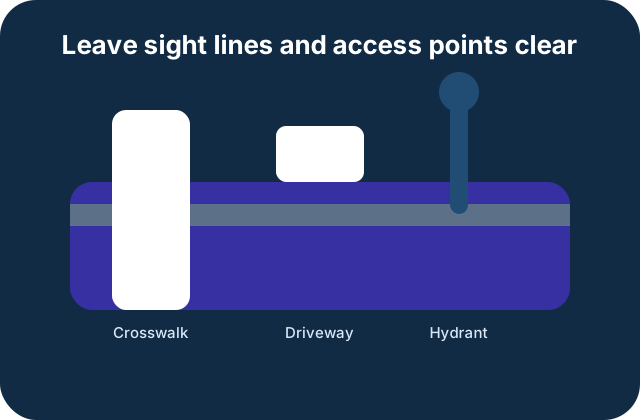
Memorize high-risk no-parking zones such as crosswalks, fire hydrants, driveways, and places where a parked car would block visibility.
Know how to secure the vehicle when parked, including using the parking brake and positioning the wheels correctly on hills.
Temporary stopping can still be illegal if it blocks traffic or creates danger, even if the driver plans to stay only a moment.
Questions about curbs and grades usually test whether you understand how the car should roll if the brakes fail.
If an answer keeps the vehicle farther from pedestrians, intersections, or blind spots, it is usually closer to the Oregon rule.
Wheel direction protects you if the car rolls Hill-parking questions usually test whether you understand where the vehicle should move if the brakes fail.Think about what a parked car would block Crosswalks, hydrants, driveways, and sight lines matter because a parked vehicle can create risk even when traffic is light.
Sample Oregon DMV questions
Review each answer and explanation, then confirm the rule in the official Oregon Driver Manual.
When parallel parking on a street with a curb, your wheels should generally be:
Within 12 inches of the curb
Within 3 feet of the curb
Touching the curb at all times
More than 2 feet from the curb
Correct answer: Within 12 inches of the curb
Explanation: Parking close to the curb helps keep the travel lane clear and reduces the chance of dooring traffic.