Review where you may not park, how to secure the vehicle on hills, and which stopping situations create safety and visibility problems in Oregon.
Key takeaways
Parking questions are often really visibility questions. Oregon cares about whether your vehicle would block sight lines, access, or space for safer road users.
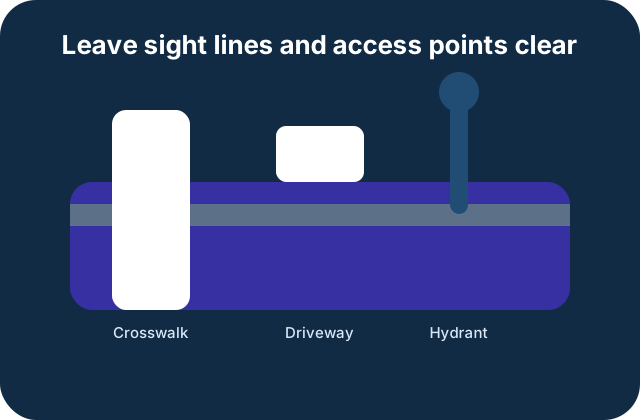
Memorize the highest-risk no-parking zones first: hydrants, crosswalks, driveways, railroad crossings, and places where a stopped vehicle would create immediate danger.
Hill-parking answers become easier when you picture where the car would roll if the brakes failed. Wheel direction and the parking brake work together.
Use focused topic practice after you read the manual section. Distance rules and no-parking exceptions stick better when you see them inside real scenarios.
Think about what a parked car would block Crosswalks, hydrants, driveways, and sight lines matter because a parked vehicle can create risk even when traffic is light.
Sample Oregon DMV questions
Review each answer and explanation, then confirm the rule in the official Oregon Driver Manual.
How close may you park to a fire hydrant?
Not within 10 feet
Not within 3 feet
Not within 20 feet
As close as you want if you stay in the car
Correct answer: Not within 10 feet
Explanation: Fire hydrants must remain accessible for emergency response.